
Can You Live In The House During A Loft Or Garage Conversion?
The question comes up on almost every site visit, usually about ten minutes in, and it is normally asked with a wince. The answer is that the overwhelming majority of Cornish households stay in the house from the first day to the last, and that a conversion is one of the least intrusive building projects you can have done to an occupied home. That is not a sales line. It is a consequence of where the work happens: above your ceilings, or behind a garage door, in a part of the building you are not currently living in. What follows is what staying put actually feels like, week by week, and the specific handful of days where we tell people to plan around us.

The day the loft stops being a loft, and where everything in it goes
The first thing that changes is storage, and it changes before any builder arrives. The loft has to be completely cleared, which for most households means confronting fifteen years of boxes, a cot, a bread maker and several bags of clothes that were going to the charity shop in 2019. We ask for it empty a week before the start date rather than on the morning, because the alternative is a full skip charge for things you would have kept.
Where it goes afterwards is the part people underestimate. A conversion permanently removes the biggest storage volume in the house, and it does not come back. Households that plan for that - a garden store, a redistribution into wardrobes, an honest cull - find the whole project easier than households that stack it in the spare room and then live around the stack for two months.
Once the loft is clear, most of what happens next happens through the scaffold. Structural timbers, steels, floor joists and insulation all arrive over the roof or up the outside, not through your hall, which is the single biggest reason a loft conversion is liveable when a kitchen refit is not. The programme itself, and how it stretches across a Cornish calendar, is set out separately in our piece on how long a loft conversion takes here.
Garage conversions: the job most families barely notice
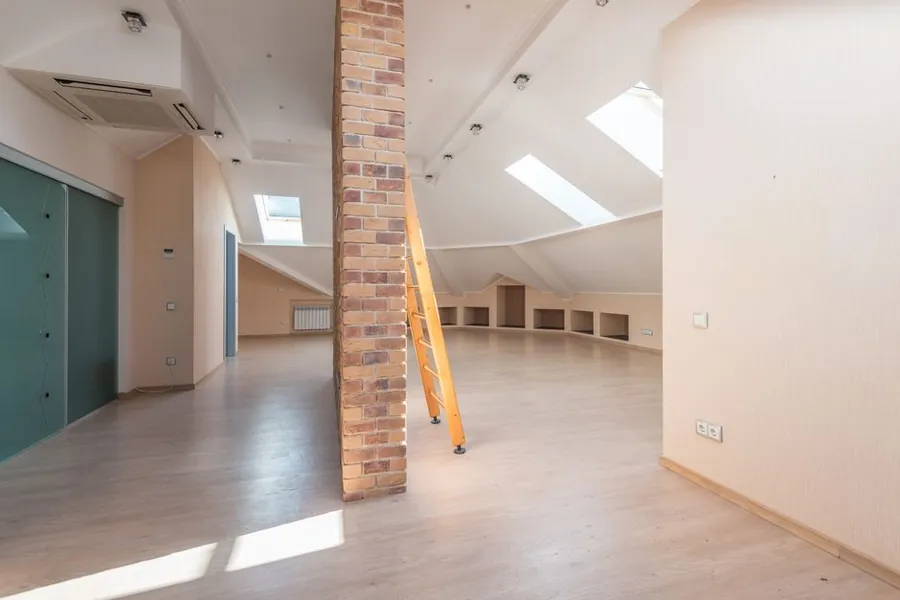
If a loft conversion is liveable, a garage conversion is close to invisible. The garage is already a separate compartment with its own external door, and for most of the build that is the door everyone uses. Materials go in that way, waste comes out that way, and the connecting door into the house stays shut.
Two days interrupt that. The first is if the garage is being opened into the hall or a reception room, which means forming a structural opening: an emptied and sheeted room, a steel going in, and a very loud few hours. The second is the floor. A garage slab usually sits lower than the house floor and has to be built up with insulation and a screed or a floating deck, and while that is curing the garage is not a route anywhere.
Everything else - insulating the walls, closing the door opening in blockwork, running the electrics, boarding, plastering - happens on the far side of a closed door. We have finished garage conversions where the family were working from home in the next room throughout and lost about half a day in total.

Dust, and the difference between a dust sheet and a proper seal
Dust is what people actually mean when they ask whether they can live in the house. The answer depends entirely on how the job is contained, and containment is where corners get cut.
A dust sheet catches debris and stops splashes. It does nothing about the fine dust produced by cutting blockwork, chasing walls for cables or sanding plaster, which travels on air currents and settles two rooms away. What works is a sealed barrier at the boundary of the work - polythene taped floor to ceiling with a zipped door in it - plus extraction on the tools that create the worst of it. The HSE’s guidance on construction dust is written for the people breathing it all day rather than for householders, but the control measures it describes are exactly the ones that determine whether your landing is habitable.
Practical things that help, in order of how much difference they make: keep the barrier zipped rather than propped open, agree one route in and out and stick to it, take up carpet on that route rather than sheeting over it, and accept that the last week of plastering and sanding is the dustiest part of the whole job even though it looks like the tidy end.
Noise, working from home, and what a neighbour can actually complain about
Conversions are not constantly loud. They are quiet for long stretches and then briefly very loud, which is harder to plan around than a steady hum would be. The loud days are cutting the roof, fixing steels, cutting the stair opening, chasing walls and any blockwork cutting. Between them are days of carpentry, insulation, boarding and second fix that are no worse than a neighbour’s DIY.
If you work from home, the workable approach is to ask for the loud days in advance rather than to hope. We give ours out at the start of the week and again the afternoon before, so calls can be moved rather than abandoned. It is a small thing that decides whether people remember the job as manageable.
On neighbours, there is no fixed legal cut-off for domestic building noise in Cornwall. It falls under statutory nuisance, and Cornwall Council’s noise service assesses complaints on whether the noise is unreasonable in context rather than against a fixed timetable. Two Cornish situations are worth thinking about before you start: a holiday let next door in July, where the occupants change weekly and have paid for a quiet week, and a terrace where the party wall carries hammer noise straight into somebody’s front room. A note through the door a fortnight before, with dates and a phone number on it, defuses almost all of this.

Scaffolding, and the fortnight your house is wrapped
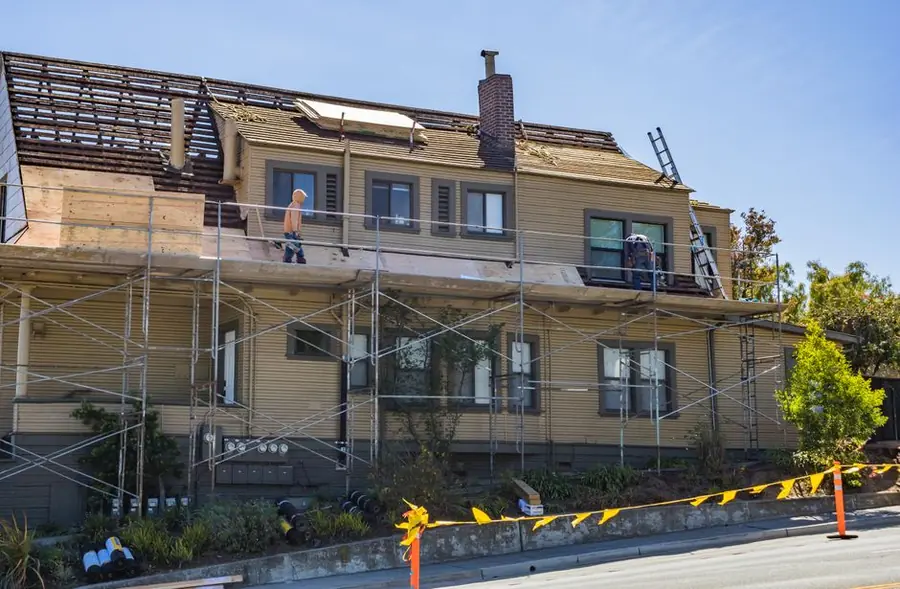
Scaffolding changes the house more than anything else on the list, because it changes the light. Rooms behind sheeted scaffold go noticeably darker, and on a north-facing Cornish elevation in October that is a real effect on a household rather than a cosmetic one. It goes up before the roof work starts and, on most loft conversions, stays until the external finishing is signed off.
It also changes security. A scaffold is a ladder to your first floor, so ground-level ladders come off at night, alarm sensors want checking, and upper windows need to be shut rather than on the latch. Anyone who tells you otherwise has not worked in a town with a summer visitor population.
Where the scaffold has to stand on the pavement or the road, which it does for a great many Cornish terraces and village streets, it needs a licence from the highway authority rather than just an agreement with the neighbour. Cornwall Council charges around £157 per calendar month for scaffolding on the highway, and it sits on the quote with a lead time attached. Services get interrupted far less than people expect, by the way: water and heating usually go off for an hour or two when a radiator or a pipe run is moved, and the consumer unit is isolated for part of one day at second fix.
Skips, the lane, and where everybody parks
This is the part that causes the most friction on Cornish jobs and gets the least attention at quote stage.
A skip on your own drive needs nobody’s permission. A skip on the road does, and Cornwall Council’s permit for placing a skip on the highway has to be in place before it is delivered, with lighting and markings on it once it is. On a narrow lane in a village like St Mawgan or Constantine, the practical answer is often not a skip at all but a grab lorry on scheduled visits, or a van run to a household waste site, because a skip would close the lane.
Parking is the other one. Two or three trade vehicles need somewhere to be, and in a terrace with permit parking or a hill with a single passing place, that has to be worked out in the first conversation rather than the first morning. Between June and September, add the visitor traffic that fills every informal space in coastal towns, and a job that would be simple in February needs planning in August.
Deliveries follow the same logic. Roof trusses, steels and plasterboard arrive on lorries that cannot get down some Cornish lanes at all, so materials get broken into smaller loads, which costs a little more and saves a great deal of aggravation.

When we tell people to move out
There are jobs where staying is the wrong call, and we would rather say so at the quote than halfway through.
A whole-roof rebuild is the clearest. Where a bungalow roof is coming off and going back on differently, the house is open to the elements for a period, and although it is protected and sheeted, living underneath it with small children is not something we recommend. The same applies where a conversion is running alongside a rewire or a full heating replacement, because then the disruption is no longer confined to the space being converted.
The other cases are about people rather than buildings. A newborn, someone recovering from surgery, a household member with a respiratory condition, or somebody working from home on calls all day with no alternative room - each of those turns an inconvenience into something worse, and a fortnight away over the loudest phase is often cheaper than the alternative in every sense.
Everyone else stays. If you want a straight answer about your own house rather than a general one, book a free site visit and we will walk you through what your specific job looks like from inside it, including which days you will want to be elsewhere.

Common questions
- Do you have to move out during a loft conversion?
- In the large majority of cases, no. A loft conversion is unusual among building projects in that nearly all of the work happens above your ceilings, reached from external scaffolding, and the house below stays sealed until the stair opening is cut near the end. That is normally a two or three day disruption rather than a fortnight of it. Households do sometimes choose to be elsewhere for those few days, particularly with a baby in the house or someone working from home on calls, but it is a preference rather than a requirement on most jobs.
- Can you live in the house during a garage conversion?
- Yes, and most people barely register that it is happening. An integral or attached garage is already separated from the house by a wall and a door, so the noisy and dusty parts of the work stay on the far side of it. The exception is the day the structural opening is formed if the garage is being knocked through into a hall or reception room, which needs the adjoining room emptied and sheeted, and the day the floor screed goes down, when that route in and out of the house is unusable while it sets.
- What are the working hours for building work in Cornwall?
- There is no blanket statutory start and finish time for domestic building work. Construction noise is handled under the statutory nuisance regime rather than by fixed hours, which means what matters is whether the noise is unreasonable in its context, and Cornwall Council investigates complaints on that basis. In practice we work from around 8am to 5pm on weekdays, keep Saturdays to quieter finishing trades where we work them at all, and do not work Sundays or bank holidays on domestic conversions.
- Will the house be secure and weathertight overnight?
- Yes, and ask any contractor this directly before you sign. Once the roof is opened for a dormer, the opening is sheeted and battened at the end of every working day rather than left open, and scaffolding is sheeted or monarflexed where the exposure warrants it. The stair opening, once cut, gets a temporary barrier at the same point each evening. Nothing about a properly run conversion should mean an unsecured or open house overnight, in a county that can turn from still to horizontal rain inside an hour.
- How much dust will there actually be in the rest of the house?
- Far less than people expect if the containment is done properly, and far more than they expect if it is not. The difference is between a dust sheet, which stops splashes and catches debris, and a sealed barrier with a zipped door across the stair opening, which is what actually keeps fine dust out of the landing and bedrooms. Cutting blocks, chasing walls and sanding plaster all produce fine respirable dust, so it is the sealed barrier plus on-tool extraction that keeps the rest of the house usable, not the sheeting.