
Garage Converted Without Building Regs? What To Do Before You Sell In Cornwall
A Cornish sale rarely falls apart over the survey. It falls apart over one line in the buyer’s solicitor’s enquiries: please supply the building regulations completion certificate for the garage conversion. If the conversion was done by a previous owner, or done years ago by a builder who never mentioned building control, there is no certificate to supply, and the chain stops moving while everyone works out whose problem it is. Cornwall Council is a single unitary authority, so there is at least no argument about which building control team you are dealing with - but there is only one team, and only one route back to a certificate.
Prefer to hear it? The short version is below, and the detail is underneath.
What “no building regs” actually means
Planning permission and building regulations are two separate consents, and a garage conversion in Cornwall usually needs only the second one. That is the trap. Because most conversions are permitted development, plenty of owners concluded there was no paperwork at all, when in fact the building regulations application was the one that was never optional.
Building control signs off the things nobody can see afterwards - the floor build up, the insulation in the walls and roof, the ventilation, the electrics, the escape route from the room. When the work is finished and the inspections are done, the council issues a completion certificate. That certificate is what conveyancers ask for, and it is the only document that proves any of it was checked.

The advice that stopped being true in October 2023
Search this problem online and you will still be told the council has 12 months from completion to act, so old work is effectively safe. That was correct for decades. It is not correct now.
Section 39 of the Building Safety Act 2022 amended section 36 of the Building Act 1984 and replaced the 12 month limit with 10 years in England, effective from 1 October 2023. A garage converted in 2019 sits inside that window. So does one converted last spring. The practical effect is not that Cornwall Council is about to descend on a converted garage in St Columb - councils have never worked that way - but that buyers’ solicitors have noticed, and the risk they are pricing has grown from one year to ten.
That is why enquiries about garage conversions have got sharper, and why the old reassurance of “it was ages ago, nobody minds” no longer ends the conversation.
Regularisation, and why it has to be the council
There are two ways to satisfy a buyer. The first is regularisation: applying to Cornwall Council to have the existing work assessed and, if it passes, certified. Two conditions apply. The work must have started on or after 11 November 1985, and the application has to go to the local authority. Private approved inspectors cannot touch unauthorised work, so the usual free choice of building control body does not exist here.
The council will want drawings and calculations describing what was built, and it will want to inspect. Since the finished room hides everything worth checking, that means opening up - lifting a section of floor, cutting into a wall lining, exposing the lintel over the old door opening. You supply the access; the surveyor decides what needs to be seen.
What regularisation costs here
Cornwall Council sets its regularisation charge as a minimum of the Building Notice net fee plus 40 per cent, and the fee is zero rated for VAT because these count as applications in default. Working it through the council’s own schedule of charges: a conversion of 10 to 40 square metres carries a Building Notice charge of £1,248 including VAT, which nets down to £1,040, and the 40 per cent uplift takes it to about £1,456. Almost every single garage in Cornwall falls in that band. A double garage combined with an extension can cross into the 40 to 150 square metre band, where the Building Notice charge is £1,728 and the arithmetic lands nearer £2,016.
Anything outside the standard scale is charged at £96 an hour including VAT. The council quotes each regularisation individually once it sees what it is dealing with, so treat these as the shape of the bill rather than the bill itself.
Then there is the second cost, which is the one nobody budgets for: whatever the inspection says has to be put right.
Indemnity insurance, and the sentence that matters
The other route is a lack of building regulations indemnity policy, arranged by your conveyancer and usually paid for by whoever the negotiation says should pay. It is quick and it is cheap - the HomeOwners Alliance puts a straightforward policy on a £500,000 house at around £175, with most falling somewhere between £20 and £300. Lenders’ solicitors ask for them routinely, and a great many Cornish sales complete on one.
What it buys is narrow. It covers the buyer’s financial loss if the council enforces. It does not make the room warm, dry, ventilated or electrically safe, and it does nothing about a survey that comes back describing a cold, damp room over an unsealed slab.

It also has one hard condition. The policy is invalid if anyone approaches the council about the missing certificate. Not just you - anyone. Ask building control an innocent question, or start a regularisation and abandon it, and no insurer will write the policy afterwards. You get one choice, and you have to make it before your solicitor starts making calls on your behalf.
What usually fails when the room is opened up
Regularisation is not a rubber stamp. The work has to meet the standards that applied when it was carried out, and four things account for most of the failures we see in Cornish garages.
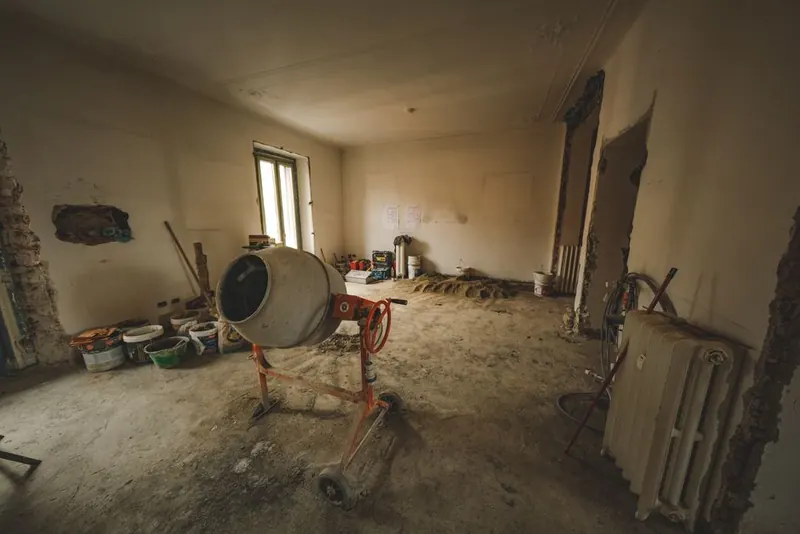
The floor comes first. A garage slab was poured to take a car and shed water towards the door, often with no damp proof membrane, and frequently sitting lower than the house floor. Covering it with chipboard and carpet does not change any of that - which is the root of why so many converted garages here end up cold and damp.
Second, thermal performance. A habitable room has to hit a standard a garage never did, and battening plasterboard onto the blockwork rarely gets close.
Third, the electrics. Running a new circuit into a converted garage is notifiable work under Part P, and it needs a certificate from a registered electrician or an inspection through building control. Rooms wired by a helpful relative in 2016 almost never have one.
Fourth, escape. If the garage became a bedroom, the room needs a proper way out - its own door or a compliant escape window - rather than an exit that leads through another room. It is the failure people find hardest to believe, because the room has been slept in for years.
The opening up: what actually gets cut
Owners picture demolition. In practice it is targeted and modest, and a builder who has done it before will know what the surveyor wants to see before being asked: a lifted section of floor at the perimeter, a metre or so of wall lining removed where the insulation should be, the head of the old garage door opening exposed to show the lintel and how the infill panel is tied in, and the consumer unit opened up so the circuit can be traced.

Done properly that is a day or two of work plus making good. Done blind, it becomes three visits and a lot of unnecessary damage. If the room passes, everything closes back up and you have a certificate. If it does not, you already have the wall open at the point where the remedial work has to start.
So which route, and when
If the conversion is sound and only the paperwork is missing, regularisation is worth doing. It costs more up front, it takes a few weeks, and it ends with a certificate that stays with the house permanently instead of a policy that has to be re-bought, more expensively, every time the property changes hands.
If the conversion is genuinely poor, the calculation changes. Regularisation will expose everything, and you will be doing the remedial work in the middle of a sale, at the exact point where you have least room to argue about who pays for it. Sometimes the honest answer is to price the defect into the sale, let the buyer take a policy, and be straightforward about what they are buying.
What does not work is deciding in week six of a chain. Both routes need a builder to look at the room first, and only one of them survives a phone call to the council. If you are thinking about selling in the next year and there is a converted garage in the house, get it looked at now, while both doors are still open.
Book a survey of your converted garage in Cornwall and we will tell you which route the room can actually pass.
Common questions
- Can I get retrospective building regulations approval for a garage conversion in Cornwall?
- Yes, through a regularisation application to Cornwall Council, provided the work started on or after 11 November 1985. Nothing earlier can be regularised because the power did not exist then. Only the council can handle it - a private approved inspector is not allowed to certify work that has already been built, so the usual choice between the two disappears here.
- How much does regularisation cost in Cornwall?
- Cornwall Council normally calculates it as a minimum of the Building Notice net fee plus 40%. For a conversion between 10 and 40 square metres, which covers almost every single garage, the Building Notice charge is £1,248 including VAT, so the regularisation fee lands at roughly £1,456. Regularisation fees are zero rated for VAT because they count as applications in default. The council issues a bespoke quote once you apply, so treat that as a guide rather than a price.
- How long can the council take action over an unauthorised garage conversion?
- Ten years from completion, in England. Section 39 of the Building Safety Act 2022 replaced the old 12 month limit in section 36 of the Building Act 1984, and the change took effect on 1 October 2023. Any guidance you find that still says 12 months was written before that and should be ignored.
- Will indemnity insurance solve the problem when I sell?
- It solves the conveyancing problem, not the building problem. A lack of building regulations policy covers the buyer against loss if the council takes enforcement action. It does not pay to fix a cold floor, an uninsulated wall or an unsafe circuit, and it is void the moment anyone asks the council about the work. That last point is why you have to choose one route or the other before your solicitor picks up the phone.
- What is most likely to fail when an old garage conversion is inspected?
- Four things, in our experience: no damp proof membrane tied into the floor, thermal performance well short of the standard for a habitable room, electrical work with no Part P certificate behind it, and no escape window where the room has become a bedroom. None of them are visible once the room is decorated, which is exactly why the surveyor asks for parts of it to be opened up.